Description
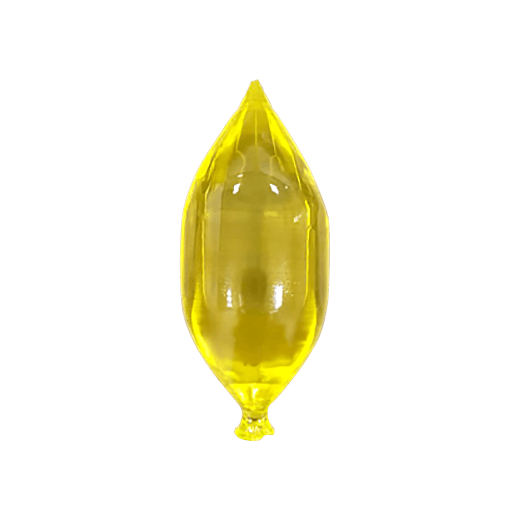
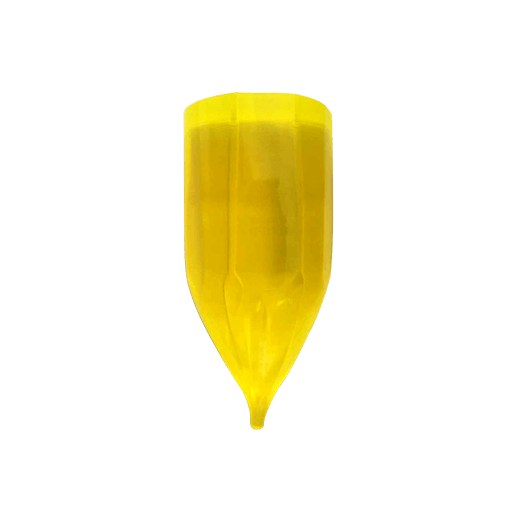
YAG(Ce) | Fast and Rugged Scintillation Crystal
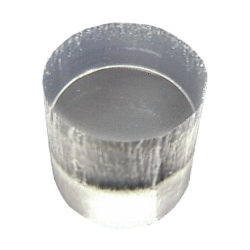
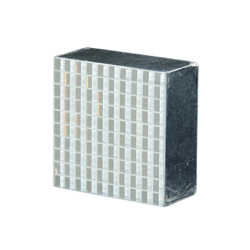
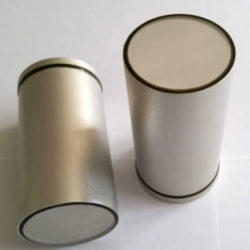
The YAG(Ce) Scintillation Crystal (Y3Al5O12:Ce) is a highly efficient material used in advanced radiation detection. It is famous for its mechanical strength and chemical stability. Consequently, researchers prefer this crystal for applications requiring durability and fast response times. Moreover, its unique spectral properties make it a versatile phosphor for both vacuum and high-electricity environments.
🛡️ Superior Stability in Extreme Environments
Unlike many other scintillators, the YAG(Ce) Scintillation Crystal is completely non-hygroscopic. This means it does not absorb moisture from the air. Therefore, you do not need specialized airtight packaging for its operation. Furthermore, the crystal is chemically resistant. This durability allows for the production of extremely thin YAG(Ce) screens. These screens remain stable even when exposed to harsh industrial conditions or high-vacuum settings.
🔬 High Luminous Efficacy and Fast Decay
The performance of this crystal is centered on its speed and light output. It features a very fast decay time, which is essential for high-rate counting. In addition, its peak emission is at 550 nm. This wavelength is ideal because it allows for effective coupling with silicon photodiode detectors.
Because it provides high luminous efficacy, it is commonly used as a phosphor in cathode ray tubes. It is also a key component in the production of white light-emitting diodes (LEDs).
🔐 Built for Advanced Imaging and Microscopy
Precision and toughness are the core values of our YAG(Ce) line. This crystal is highly compatible with high-electricity environments. For instance, it is a standard material in electron microscopy. Because it can withstand electron bombardment without degrading, it ensures a long lifespan for imaging components. Furthermore, its rugged nature makes it perfect for beta and X-ray counting where mechanical resistance is mandatory.
Why Choose YAG(Ce)?
We designed our YAG(Ce) crystals to maximize the clarity of your imaging results. This material focuses on high-speed data acquisition and mechanical endurance. By choosing the YAG(Ce) Scintillation Crystal, you gain a fast, stable, and reliable phosphor. It remains the top choice for professionals who require high-resolution imaging screens and durable detector components.
Key Features
-
Mechanical Resistance: Exceptional stability and durability under stress.
-
Fast Decay Time: Optimized for high-speed pulse acquisition.
-
Non-Hygroscopic: No moisture sensitivity, simplifying storage and use.
-
Silicon Compatibility: 550 nm peak emission couples perfectly with photodiodes.
-
Rugged Structure: High resistance to chemicals and electricity.
Main Applications
-
Electron Microscopy: High-durability screens for SEM and TEM.
-
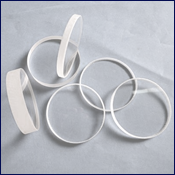
Imaging Screens: Thin screens for electron and X-ray imaging.
-
Radiation Counting: Accurate beta and X-ray detection.
-
Lighting Technology: Phosphors for white LEDs and cathode ray tubes.
Technical Specifications Summary
| Feature | Specification |
| Material | YAG(Ce) (Y3Al5O12:Ce) |
| Peak Emission | 550 nm |
| Hygroscopicity | None |
| Mechanical Properties | Excellent / Rugged |
| Coupling Efficiency | High (with Silicon Photodiodes) |