Description
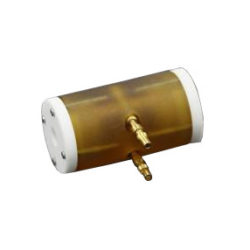
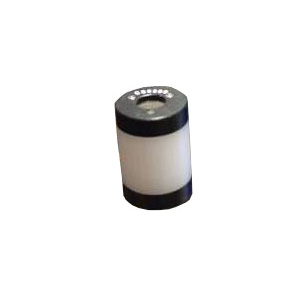
DKDP Pockels Cell from X-Z LAB works as an electro-optic Q-switch with reliable, stable performance across a diverse range of laser applications. The Pockels effect rotates polarization in the crystal, which switches the cavity Q in nanoseconds.
DKDP Pockels Cell with 99.8% deuteration
The headline number is the deuteration level: 99.8% KD*P. High deuteration keeps absorption low, which matters because absorbed light becomes heat. Less heat means a more stable switch and high optical damage thresholds. Because absorption stays minimal, the cell handles higher average powers without thermal drift.
DKDP Pockels Cell assembly without adhesives
The cells use adhesive/epoxy-free assembly. That choice removes the weakest link in high-power optics: organic layers that can burn or outgas. In addition, the standard configuration employs a broadband AR coating for improved durability and performance. High reliability is the result: fewer failure modes, longer service intervals.
Options: apertures, fluid, and end caps
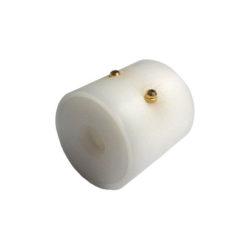
Apertures run from 8 mm diameter up to 20 mm diameter, so the cell matches your beam size. The DKDP Q-switch is also available with index-matching fluid and a choice of end caps. Choosing the right aperture matters: an oversized cell costs more, while an undersized one clips the beam. Therefore, match the aperture to your beam diameter with a small margin.
Typical applications
OEM laser systems integrate these cells where reliability cannot be a question. Medical and cosmetic lasers use them for stable pulse control. In particular, stable pulse-to-pulse energy matters for medical treatments. Versatile R&D laser platforms rely on them for flexible experiments. Military and aerospace laser systems demand them for rugged operation. For a crystal-based alternative, see our BBO Pockels Cell.
Request a quote for a DKDP Pockels Cell with your aperture, wavelength, and repetition rate.