
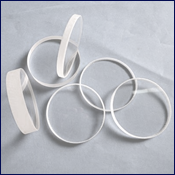
Description
6Li-Glass Scintillation Crystal (cerium-activated lithium silicate glass scintillator) serves alpha, beta, gamma, and neutron detection. Neutron detection is based on the neutron and 6Li nuclear reaction. It is one scintillator for four radiation types. The field is neutron detection.
6Li-Glass Scintillation Crystal advantages
Short decay time. Good temperature stability. High slow-neutron detection efficiency. Non-deliquescent. Acid and alkali resistant. High/low temperature rapid-change resistant. Glass that survives harsh duty. Corrosive vapors do not faze it. Short decay suits high count rates. Rapid temperature changes do not crack it. Temperature stability aids outdoor use.
6Li-Glass Scintillation Crystal for neutrons
Glass tolerates corrosive liquids and vapors where crystals cannot. Temperature stability keeps calibration across shifts. Field instruments stay accurate. The 6Li reaction gives clean neutron signals. Downhole tools face heat and chemicals. No hermetic can is needed. The reaction products are easily detected. Neutrons are the specialty.
Typical applications
Neutron flight time experiments. Petroleum well logging. Moisture content measurement. NDT and neutron photography. Soil moisture gauges use neutron methods. Match the scintillator to the radiation. NDT inspectors value portability. Neutron photography needs large areas. Well logging is the classic job. Moisture gauges use the same physics. For gamma spectroscopy, see our NaI(Tl) Scintillation Crystal.
Request a quote for 6Li-Glass Scintillation Crystal with your detector dimensions. Specify the radiation types you measure. Tell us the environment for housing advice. Volume orders support instrument makers. Specify the housing material as well.