Description
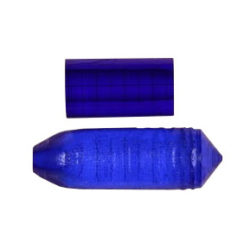
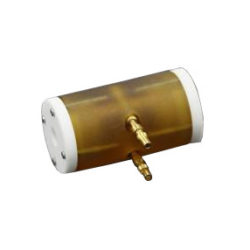
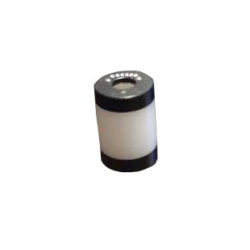
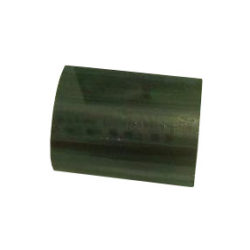
LN MgOLN Q-Switch Crystal is a low-cost photoelectric material with good mechanical and physical properties and high optical homogeneity. It covers both undoped LiNbO3 and MgO-doped LiNbO3. The material is lithium niobate.
LN MgOLN Q-Switch Crystal advantages
Large nonlinear optical coefficient. Large acceptance angle with small walk-off. Wide temperature and spectral bandwidth. High electro-optic coefficient with low dielectric constant. No water absorption. Chemical and mechanical stability. The wide bandwidth tolerates temperature drift in the field. No water absorption simplifies packaging and handling. The low dielectric constant eases high-frequency drive design. These make LiNbO3 a widely used material for Q-switches and phase modulators.
MgO doping for higher damage threshold
Compared with LiNbO3, MgO-doped LiNbO3 exhibits a higher damage threshold. The doped crystal handles higher powers in the same footprint. One device design scales to higher energy by changing the grade. MgO doping is the standard route to power scaling in LiNbO3. For high-energy Q-switching, specify the MgO-doped grade.
LN MgOLN Q-Switch Crystal applications
Frequency doublers and 1064 nm-pumped optical parametric oscillators. Quasi-phase-matched (QPM) devices. Q-switches and phase modulators. Waveguide substrates and surface acoustic wave (SAW) wafers. Laser radar. Industrial YAG(Nd) laser systems. Medium-sized laser power devices. Waveguide devices exploit the strong E-O effect in compact form.
Why low cost matters
Low cost opens E-O Q-switching to price-sensitive systems. Designers specify LiNbO3 where performance per dollar decides. For Pockels cells in BBO, see our BBO Pockels Cell.
Request a quote with your crystal cut, doping choice, and electrode requirements. Tell us the switching voltage for electrode design.