
Description
Plastic Scintillator | High-Transparency Scintillation Crystal
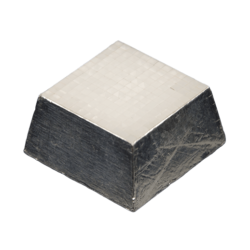
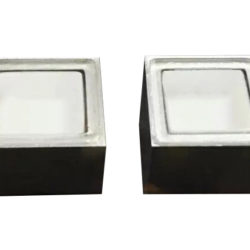
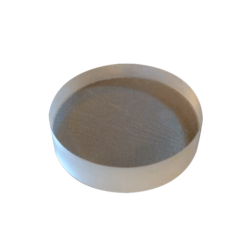
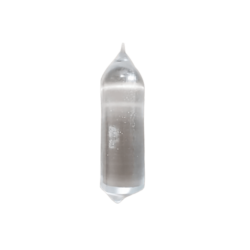
The Plastic Scintillation Crystal is an essential tool for modern radiation detection. It is widely used to identify X-rays, gamma rays, fast neutrons, and charged particles. Because it offers high transparency and excellent light transmission, it ensures accurate data collection in various settings. Furthermore, its stable performance makes it a reliable choice for long-term industrial and security applications.
🛡️ Rugged Durability and Mechanical Strength
One of the primary advantages of the Plastic Scintillation Crystal is its exceptional physical toughness. It features high mechanical strength and provides strong resistance to vibration and impact. Therefore, it is perfectly suited for mobile detection units and harsh industrial zones. Moreover, the material is highly resistant to moisture. This durability ensures that the crystal maintains its performance in outdoor or humid environments without degrading.
🔬 High-Speed Detection and Optical Clarity
The efficiency of our Plastic Scintillation Crystal is driven by its superior timing and optical properties. It boasts a very short decay time, which is critical for high-rate counting tasks. Additionally, the high transparency of the plastic allows for efficient light collection over large volumes. Because it captures radiation events with high fidelity, it is a leading material for fission neutron detection and high-sensitivity isotope gauges.
🔐 Versatile Design and Large-Scale Integration
We focus on providing flexible solutions for complex security needs. The Plastic Scintillation Crystal can be easily designed into various product types and large dimensions. For instance, it is commonly used in passageway type radioactive detection systems at border crossings. Furthermore, X-Z LAB can customize the size and shape to fit specific area radiation monitors. Consequently, you can scale your detection capabilities from small laboratory sensors to massive security portals.
Why Choose Our Plastic Scintillators?
We deliver high-performance materials that simplify your radiation safety workflow. Because our plastic crystals combine light transmission with mechanical endurance, they offer a cost-effective solution for large-volume sensing. Additionally, their stable chemical properties ensure a long operational life. It remains the gold standard for professionals who require a durable and versatile Plastic Scintillation Crystal.
Key Features
-
High Transparency: Ensures superior light transmission for clear data.
-
Short Decay Time: Optimized for high-speed pulse acquisition.
-
Mechanical Ruggedness: High resistance to vibration and impact.
-
Environmental Stability: Moisture-resistant and stable under stress.
-
Custom Design: Available in a wide range of types and large sizes.
Main Applications
-
Isotope Gauges: For fission neutron detection and process control.
-
Passageway Detection: Reliable sensing for security portals and borders.
-
Area Monitors: Continuous radiation oversight for large facilities.
-
Charged Particle Sensing: Versatile detection for physics research.
Technical Specifications Summary
| Feature | Specification |
| Detection Type | X-rays, Gamma rays, Fast Neutrons, Charged Particles |
| Transparency | High / Superior Light Transmission |
| Decay Time | Short (Fast Response) |
| Resistance | Vibration, Impact, and Moisture |
| Scalability | Support for large-size product designs |
Compare this to our high-resolution LYSO(Ce) Scintillation Crystal for medical imaging.