Description
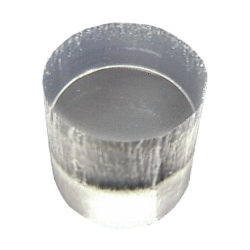
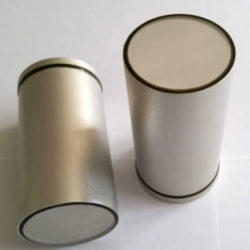
The LuAG(Ce) Scintillation Crystal is a rugged and chemically stable material for radiation detection. It features a peak emission of 535 nm, making it suited for photodiode and avalanche diode readouts. Because of its high density (6.73 g/cm3) and fast decay time (~70 ns), it provides high spatial resolution for imaging screens and Positron Emission Tomography (PET). LuAG(Ce) is Lu3Al5O12:Ce with high mechanical and chemical stability. It is the dense garnet scintillator. The host is lutetium aluminium garnet.
LuAG(Ce) Scintillation Crystal ruggedness
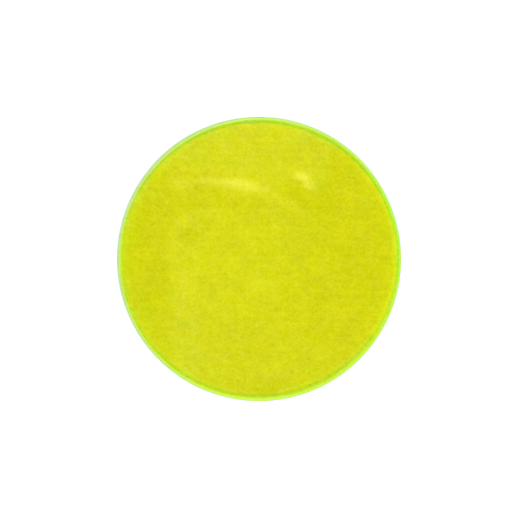
Completely non-hygroscopic. No hermetic sealing is needed. High mechanical resistance for demanding use. Easily machinable into prisms, spheres, and thin plates. The custom geometries are practical. The garnet hardness simplifies polishing. The thin plates suit imaging screens. The garnet material is famously tough.
LuAG(Ce) Scintillation Crystal density advantage
Noticeably denser than YAG(Ce). Much thinner imaging screens with high stopping power. The 535 nm emission matches photodiodes and avalanche diodes. The fast decay suits coincidence timing. It is dense, fast, and diode-friendly. The 535 nm pairs with silicon diodes. The thin screens keep resolution high. It delivers stopping power in thin form.
Typical applications
PET. Imaging screens. Radiation detection. Solid-state readouts. Gamma and charged particle detection. High-energy physics. Compact detectors value the density. Match the crystal to the modality. PET scanners need the timing. Physics labs value the speed. Compare LuAG(Ce) with our YAG(Ce) Scintillation Crystal for different imaging requirements.
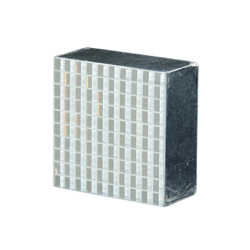
Request a quote for LuAG(Ce) Scintillation Crystal with your geometry. Specify the readout type. Array assemblies need the pixel pitch. Volume orders support OEM builds.