Description
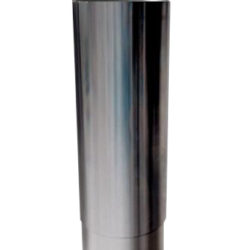
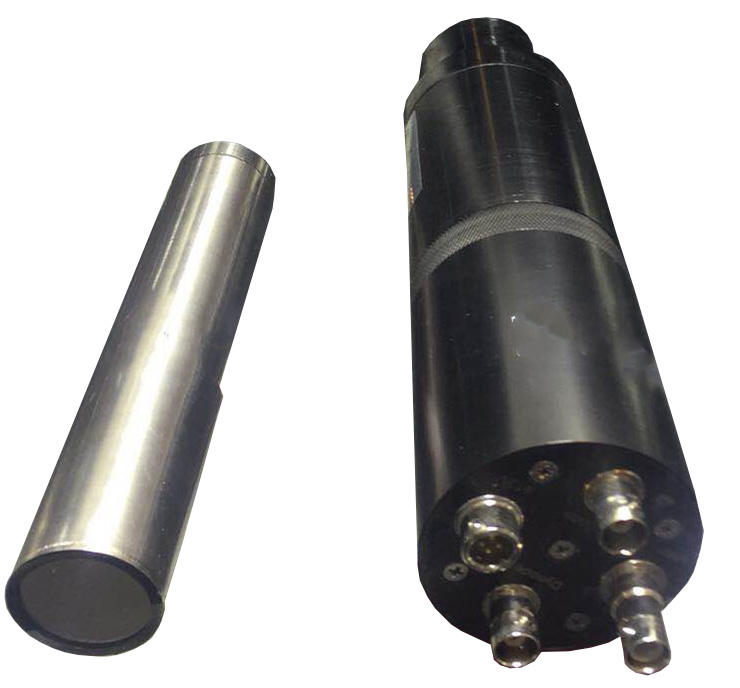
LaBr3 Scintillator Detector from X-Z LAB couples a LaBr3 crystal directly to a PMT. No optical window sits between them, so more scintillation light reaches the photocathode. The scintillator is lanthanum bromide, prized for speed and resolution.
LaBr3 Scintillator Detector performance
Direct coupling pays off in the key metrics. Energy resolution runs 2.6-3.2% at Cs-137. Time resolution is sharp. Energy linearity stays good across the range. The decay time is fast, at 20 ns or less. Consequently, the detector handles high count rates without pile-up.
LaBr3 Scintillator Detector for harsh duty
The detector operates from -10 to +50 C. Therefore, it suits high-temperature oil well logging. Environmental monitoring is another natural fit: the unit runs outdoors without climate control. Moreover, the sealed assembly keeps moisture away from the hygroscopic crystal.
Why direct coupling wins
Every optical interface loses light. Therefore, removing the window between crystal and PMT keeps more photons in the signal path. More photons mean better statistics, and better statistics mean sharper energy resolution.
Specifications at a glance
Crystal diameter spans 15-75 mm in cylindrical form, with heights of 10-100 mm. Peak emission is 380 nm, well matched to PMT response. Light yield runs 50,000-63,000 photons per MeV.
Typical applications
Radiation detection and energy spectrometer detectors lead the list. Oil well logging uses the high-temperature tolerance. Nuclear medicine and nuclear security rely on the nuclide identification capability. For semiconductor-based detection, see our CZT Scintillator Detector.
Request a quote for a LaBr3 Scintillator Detector with your crystal size and housing requirements.
LaBr3 Scintillator Detector from X-Z LAB couples a LaBr3 crystal directly to a PMT. No optical window sits between them, so more scintillation light reaches the photocathode. The scintillator is lanthanum bromide, prized for speed and resolution.
LaBr3 Scintillator Detector from X-Z LAB couples a LaBr3 crystal directly to a PMT. No optical window sits between them, so more scintillation light reaches the photocathode. The scintillator is lanthanum bromide, prized for speed and resolution.
LaBr3 Scintillator Detector performance
Direct coupling pays off in the key metrics. Energy resolution runs 2.6-3.2% at Cs-137. Time resolution is sharp. Energy linearity stays good across the range. The decay time is fast, at 20 ns or less. Consequently, the detector handles high count rates without pile-up.
Direct coupling pays off in the key metrics. Energy resolution runs 2.6-3.2% at Cs-137. Time resolution is sharp. Energy linearity stays good across the range. The decay time is fast, at 20 ns or less. Consequently, the detector handles high count rates without pile-up.
LaBr3 Scintillator Detector for harsh duty
The detector operates from -10 to +50 C. Therefore, it suits high-temperature oil well logging. Environmental monitoring is another natural fit: the unit runs outdoors without climate control. Moreover, the sealed assembly keeps moisture away from the hygroscopic crystal.
The detector operates from -10 to +50 C. Therefore, it suits high-temperature oil well logging. Environmental monitoring is another natural fit: the unit runs outdoors without climate control. Moreover, the sealed assembly keeps moisture away from the hygroscopic crystal.
Why direct coupling wins
Every optical interface loses light. Therefore, removing the window between crystal and PMT keeps more photons in the signal path. More photons mean better statistics, and better statistics mean sharper energy resolution.
Every optical interface loses light. Therefore, removing the window between crystal and PMT keeps more photons in the signal path. More photons mean better statistics, and better statistics mean sharper energy resolution.
Specifications at a glance
Crystal diameter spans 15-75 mm in cylindrical form, with heights of 10-100 mm. Peak emission is 380 nm, well matched to PMT response. Light yield runs 50,000-63,000 photons per MeV.
Crystal diameter spans 15-75 mm in cylindrical form, with heights of 10-100 mm. Peak emission is 380 nm, well matched to PMT response. Light yield runs 50,000-63,000 photons per MeV.
Typical applications
Radiation detection and energy spectrometer detectors lead the list. Oil well logging uses the high-temperature tolerance. Nuclear medicine and nuclear security rely on the nuclide identification capability. For semiconductor-based detection, see our CZT Scintillator Detector.
Radiation detection and energy spectrometer detectors lead the list. Oil well logging uses the high-temperature tolerance. Nuclear medicine and nuclear security rely on the nuclide identification capability. For semiconductor-based detection, see our CZT Scintillator Detector.
Request a quote for a LaBr3 Scintillator Detector with your crystal size and housing requirements.