Description
CZT Scintillator Detector from X-Z LAB is a pixelated semiconductor array for direct gamma-ray detection. Gamma rays enter the cadmium zinc telluride crystal and convert straight into electron-hole pairs — no scintillation step in between.
How the CZT Scintillator Detector works
The freed electrons and holes drift toward positive and negative electrodes. As they move, they induce electrical output signals. Because the conversion is direct, the energy information remains accurate. The effective atomic number is 50 and the density is 5.8 g/cm3, which gives strong stopping power in a thin 15.0 mm slab. Room-temperature operation needs no cryogenic cooling.
Why direct conversion wins
Skipping the scintillator removes one conversion loss. Therefore, more of the gamma energy reaches the electronics as signal. High volume resistivity keeps leakage current low, which protects the energy resolution. Gold electrodes make reliable contact to the crystal.
CZT Scintillator Detector formats and specifications
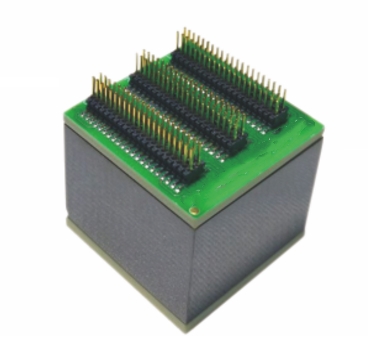
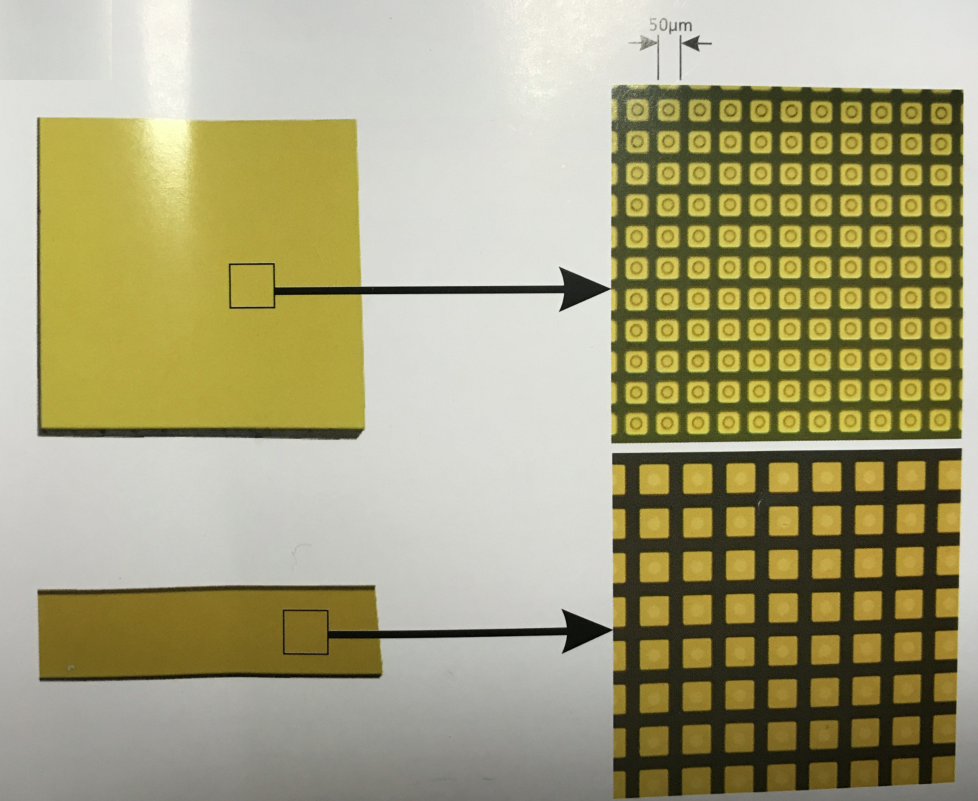
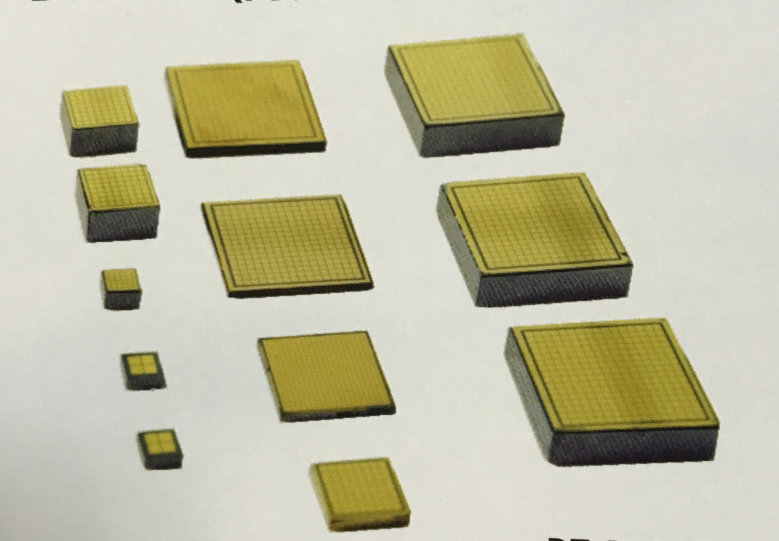
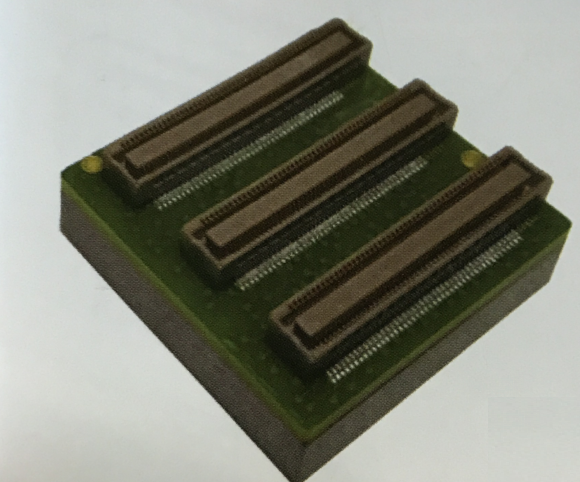
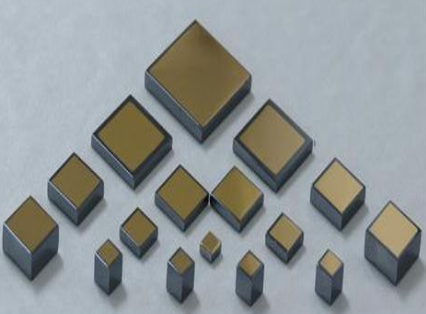
Area arrays and linear arrays are both available. The standard detector measures 22.0 x 22.0 mm2 with an 11 x 11 pixel array. Pixel size is 1.38 x 1.38 mm2 on a 1.88 mm pitch, with gold electrodes. Volume resistivity exceeds 1e10 ohm-cm. The energy range spans 60 keV to 2.6 MeV, with resolution better than 4% at 662 keV (22 C). Working temperature is -20 to 40 C; storage is 10 to 40 C.
Typical applications
Medical imaging uses these arrays where compact room-temperature detectors matter. Homeland security teams use them for screening. They serve industrial process control and food inspection lines.
For scintillator-based X-ray imaging instead, see also our CsI(Tl) Scintillator Detector. Request a quote for a CZT Scintillator Detector in area or linear format. Tell us your pixel format and energy range.
CZT Scintillator Detector from X-Z LAB is a pixelated semiconductor array for direct gamma-ray detection. Gamma rays enter the cadmium zinc telluride crystal and convert straight into electron-hole pairs — no scintillation step in between.
CZT Scintillator Detector from X-Z LAB is a pixelated semiconductor array for direct gamma-ray detection. Gamma rays enter the cadmium zinc telluride crystal and convert straight into electron-hole pairs — no scintillation step in between.
How the CZT Scintillator Detector works
The freed electrons and holes drift toward positive and negative electrodes. As they move, they induce electrical output signals. Because the conversion is direct, the energy information remains accurate. The effective atomic number is 50 and the density is 5.8 g/cm3, which gives strong stopping power in a thin 15.0 mm slab. Room-temperature operation needs no cryogenic cooling.
The freed electrons and holes drift toward positive and negative electrodes. As they move, they induce electrical output signals. Because the conversion is direct, the energy information remains accurate. The effective atomic number is 50 and the density is 5.8 g/cm3, which gives strong stopping power in a thin 15.0 mm slab. Room- temperature operation needs no cryogenic cooling.
Why direct conversion wins
Skipping the scintillator removes one conversion loss. Therefore, more of the gamma energy reaches the electronics as signal. High volume resistivity keeps leakage current low, which protects the energy resolution. Gold electrodes make reliable contact to the crystal.
Skipping the scintillator removes one conversion loss. Therefore, more of the gamma energy reaches the electronics as signal. High volume resistivity keeps leakage current low, which protects the energy resolution. Gold electrodes make reliable contact to the crystal.
CZT Scintillator Detector formats and specifications
Area arrays and linear arrays are both available. The standard detector measures 22.0 x 22.0 mm2 with an 11 x 11 pixel array. Pixel size is 1.38 x 1.38 mm2 on a 1.88 mm pitch, with gold electrodes. Volume resistivity exceeds 1e10 ohm-cm. The energy range spans 60 keV to 2.6 MeV, with resolution better than 4% at 662 keV (22 C). Working temperature is -20 to 40 C; storage is 10 to 40 C.
Area arrays and linear arrays are both available. The standard detector measures 22.0 x 22.0 mm2 with an 11 x 11 pixel array. Pixel size is 1.38 x 1.38 mm2 on a 1.88 mm pitch, with gold electrodes. Volume resistivity exceeds 1e10 ohm-cm. The energy range spans 60 keV to 2.6 MeV, with resolution better than 4% at 662 keV (22 C). Working temperature is -20 to 40 C; storage is 10 to 40 C.
Typical applications
Medical imaging uses these arrays where compact room-temperature detectors matter. Homeland security teams use them for screening. They serve industrial process control and food inspection lines.
Medical imaging uses these arrays where compact room-temperature detectors matter. Homeland security teams use them for screening. They serve industrial process control and food inspection lines.
For scintillator-based X-ray imaging instead, see also our CsI(Tl) Scintillator Detector. Request a quote for a CZT Scintillator Detector in area or linear format. Tell us your pixel format and energy range.
For scintillator-based X-ray imaging instead, see also our CsI(Tl) Scintillator Detector. Request a quote for a CZT Scintillator Detector in area or linear format. Tell us your pixel format and energy range.