Description
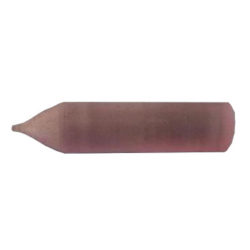
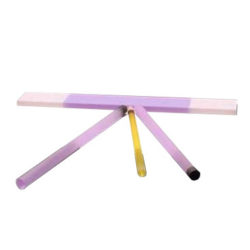
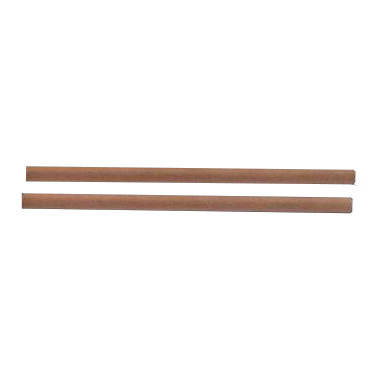
Er YAG Laser Crystal from X-Z LAB amplifies light at 2940 nm. Unlike YAG(Nd), its output is strongly absorbed by water, which is why it serves medical and dental laser systems. The YAG host brings mechanical strength and good thermal conductivity. In addition, the mature YAG platform keeps costs predictable.
Why water absorption matters
The absorption coefficient at 2940 nm is about 100 times larger than at 2 um, and 100 times larger again than at 1 um. Consequently, the laser energy deposits in a thin surface layer. Tissue ablates cleanly with minimal heat spread. For example, a 1 um Nd:YAG beam passes through water almost untouched, while 2940 nm stops within micrometers. That contrast is why surgeons choose this wavelength. Similarly, dental work benefits: enamel and dentin both contain water.
How the 2940 nm line is generated
Erbium ions in the YAG host lase on a transition that lands at 2940 nm. Diode or lamp pumping excites the ions; the crystal does the rest. Because YAG is a rugged, high-conductivity host, the rod handles the thermal load well. Therefore, thermal lensing stays modest even at high pulse energies.
Er YAG Laser Crystal performance
It offers high slope efficiency and operates well at room temperature. No cryogenic cooling, no complex thermal management. The 2940 nm output also sits in a relatively eye-safe wavelength range, which simplifies clinical deployment.
Er YAG Laser Crystal applications
Medical laser systems use the 2940 nm output for precise ablation. Dental laser systems rely on the same water-absorption mechanism: hard tissue contains water, so it couples efficiently. Beyond medicine, the strong water absorption suits any process that must remove water-rich material layer by layer. For eye-safe switching at longer wavelengths, see our Co2+ MgAlO4 Q-Switch Crystal.
Request a quote for Er YAG Laser Crystal with your rod dimensions and pump configuration. X-Z LAB supplies rods to your specification.